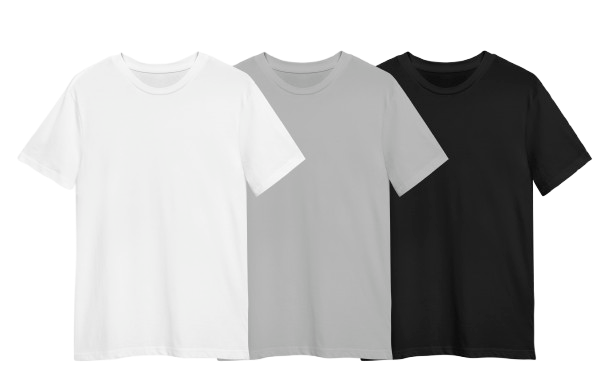
Screen-Printed Work Shirts: How to Choose Designs for Everyday Business Use
- Screen Printing
A work shirt has a job to do long before anyone notices its design. It must suit a normal shift, identify the employee, and represent the business consistently. That’s why choosing screen-printed work shirts involves more than placing a logo on the cheapest available T-shirt.
A good uniform is easy to recognize without being uncomfortable or overly promotional. A landscaping crew, restaurant team, and retail staff may all need branded shirts, but their daily routines call for different fabrics, fits, and print placements.
The following steps can help you plan shirts that work in practice, not just in a mockup.
Begin With How Employees Actually Work
Think about where employees spend their day. Do they work outdoors in warm weather, interact with customers at close range, or wear an apron or safety vest?
A large front print may be highly visible on an event shirt but hidden beneath an apron. A small chest logo may look professional in a shop yet be difficult to identify across a jobsite.
Decide what customers need to recognize first: the company name, a distinctive logo, or a department. Keep that element prominent. Other details, such as a slogan or website address, should be secondary and included only when they will remain readable at normal viewing distance.
Pick a Garment That Employees Will Wear
Consider fabric weight, breathability, fit, and laundering frequency. Cotton is a familiar choice for everyday tees, while blends can offer different drying and drape characteristics. Neither is automatically better; the specific garment matters more than a general fiber label.
Have employees check a size chart for the selected product rather than assuming all brands fit identically. If possible, compare a few samples before ordering for an entire team.
For more about material choices, the custom T-shirt fabric guide explains common printing considerations.
Choose Placement Around Visibility
A left-chest logo provides understated identification when customers meet employees face to face. A larger back print may help customers recognize a service crew from farther away. Full-front designs can work well for promotional teams or event staff.
The best placement is the one that remains visible while employees do their usual work. Check whether pockets, straps, jackets, and aprons cover the artwork.
For shirts with a small chest print and a large back design, request a quotation for both locations rather than assuming the price is unchanged.
Use Contrast Without Overcomplicating the Logo
Light ink on navy or black fabric is often easy to distinguish. Dark ink on light gray or white can create a similarly clear result. Color combinations with similar brightness may look stylish but can make small lettering hard to read.
Keep the design focused. A company name, recognizable mark, and perhaps a short supporting line are usually easier to understand than a crowded collection of services and phone numbers.
Adobe’s color-contrast explanation describes why differences in brightness help important visual elements stand out.
Prepare Art for the Finished Print Size
Start with the best original logo file available. Vector artwork is helpful because shapes and lettering can be scaled without the pixelation associated with enlarging small raster images. A PDF is not necessarily vector artwork, so the contents still need checking.
The custom shirt artwork preparation guide outlines formats and setup issues worth reviewing.
Ask for a proof showing the actual garment color, approximate dimensions, and placement. Check spelling, fine lines, and text size before approving production.
Order With Replacements in Mind
Build quantities from an employee size roster, expected laundry needs, and reasonable spare inventory.
Screen printing has setup requirements, so total quantity and number of ink colors can affect the price per shirt.
Aaron’s Designs currently lists a 20-piece minimum per screen-printed design on its screen-printing information page.
Save the approved artwork, shirt style, fabric color, ink reference, and print measurements. Those records make it easier to add shirts for new hires without accidentally changing the uniform’s appearance.
Frequently Asked Questions
Are screen-printed shirts practical for everyday uniforms?
They can be. Screen printing supports repeated designs across coordinated garments, making it useful for company identification.
The important factors are the selected blank, appropriate artwork, and normal working conditions. A light shirt may suit one workplace while a heavier or different-fit garment may suit another.
Ask the printer to confirm the material and printing method for your intended use rather than treating every T-shirt as interchangeable. Employees who work outdoors or perform physical tasks should also consider fabric comfort and garment fit.
Is a left-chest logo or back print better?
A left-chest logo often works for face-to-face customer service because it identifies the business without dominating the shirt.
A back print may help identify outdoor crews or staff who often face away from customers. Some businesses use both.
Consider the employee’s usual equipment, clothing layers, and viewing distance. Test the design on a realistic garment mockup before deciding where to print it. The goal is to keep the company recognizable without creating an uncomfortable or overly crowded design.
Which shirt colors are best for a company logo?
Start with established brand colors, then prioritize contrast. White artwork on dark navy or black often reads clearly, as does dark artwork on white or light gray.
Avoid selecting a shirt color simply because it looks attractive on its own.
Review the finished logo-and-shirt combination at actual print size, especially when the artwork includes small lettering or narrow lines.
Companies with multiple approved logo variations may use a light version on darker garments to preserve brand recognition.
Can I print a phone number on a work shirt?
Yes, but it needs to be large enough to read. A crowded list of contact information can weaken recognition of the business name.
For many teams, a concise logo on the front and a larger website or phone number on the back is more useful than several tiny lines of text.
Verify all details before proof approval, particularly if the information may change soon. Remember that someone viewing a shirt from a distance may have only a few seconds to recognize its message.
What files should I send for screen printing?
An original vector logo, such as an AI or EPS file, is a strong starting point. A suitable high-resolution image may also work depending on the design.
Avoid submitting a small screenshot from social media and expecting it to stay sharp when enlarged.
Adobe’s raster-versus-vector guide explains why these formats behave differently.
Provide intended colors and ask the printer to review the file. Artwork that appears clear on a computer screen should still be checked at the intended printing dimensions.
How can I make future uniform reorders consistent?
Keep one approved production record containing the artwork version, garment model, color, ink choices, placement measurements, and size breakdown.
A description such as “blue shirt with a small logo” leaves too much open to interpretation.
If the original blank becomes unavailable, ask for a comparable replacement and review a fresh proof.
Consistency comes from repeatable specifications, not only from reusing a picture of the first order. Accurate records can help businesses maintain a recognizable appearance as their teams grow.
Make the Shirt Work for Your Business
The best screen-printed work shirts balance identification, comfort, and consistency.
Start with the wearer’s job, choose a sensible garment, keep the design readable, and confirm every detail before production.
For a business order, you can share your logo, size list, and preferred colors through the Aaron’s Designs contact page to discuss suitable printing options.